Latest posts
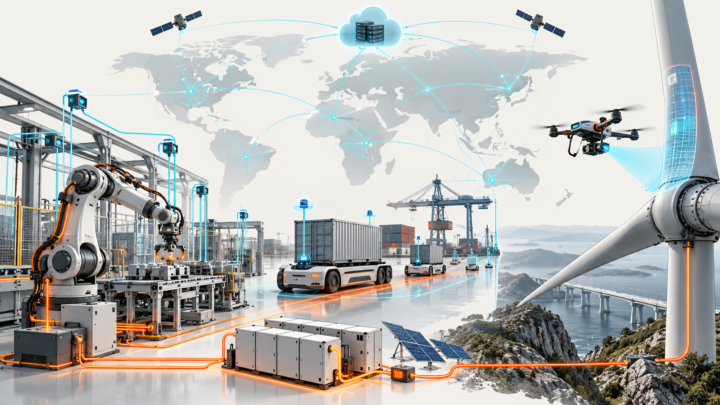
Robotics Scales Where Ecosystems Deliver
Robotics scales where customer demand, engineering capability and dependable deployment ecosystems meet. This global atlas compares seven regions through missions, industrial adoption, research, suppliers, learning infrastructure and governance. It separates operating evidence from ambitions and shows how architecture, service and semiconductor choices shape commercially useful, reproducible capability.
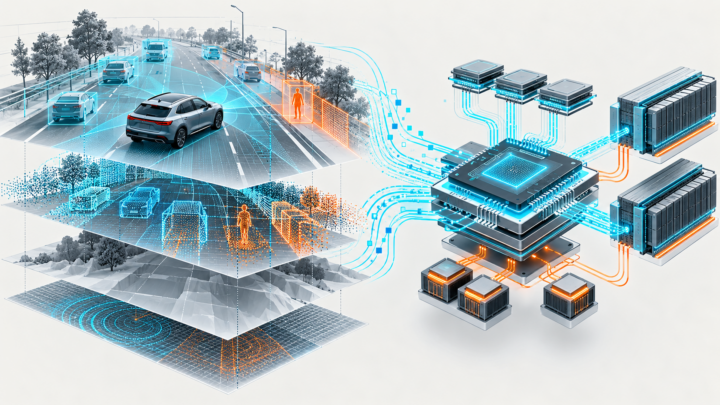
World Models Are Becoming Silicon Roadmap Instruments
World models could expose semiconductor requirements before product roadmaps harden. AMD’s proposed World Labs acquisition provides a test case for measured model–hardware collaboration. Separating training, generation, simulation, planning and embedded inference reveals distinct constraints. A reproducible workload observatory can test whether those signals improve architectural decisions and customer outcomes.
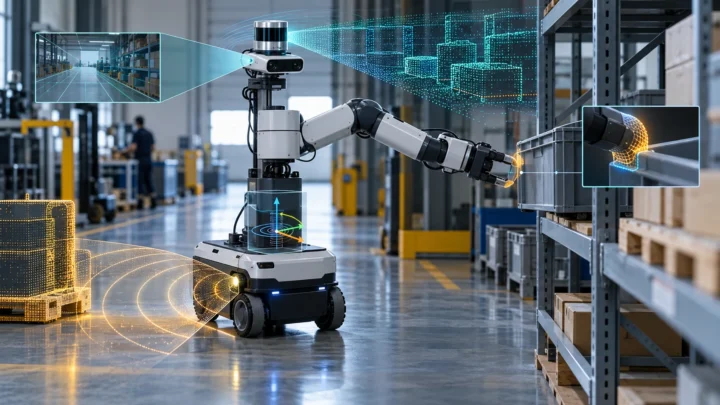
The Robot’s Senses
A robot acts on partial, delayed measurements of its surroundings and its own body. Cameras, LiDAR, radar, inertial, encoder and contact sensing each answer different physical questions. Mission requirements determine coverage, timing, calibration, fusion and degraded behavior. This technical account connects sensor choices with localization, service and field verification across
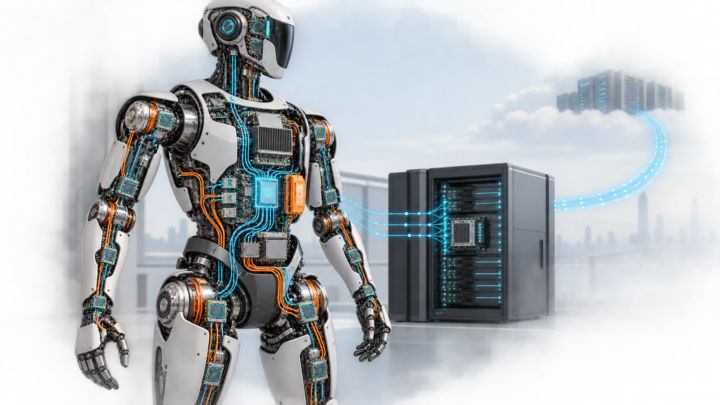
Compute from Joint to Cloud
Dependable robots distribute computation according to deadline, authority and failure consequence. Sensor-edge, joint, zonal, safety, central-AI and infrastructure domains carry distinct timing, memory, power, thermal and cybersecurity responsibilities. Their coordinated placement keeps physical authority bounded while allowing semantic intelligence and fleet-scale services to grow.

South America’s Hazelnut Frontier
Chile has turned European hazelnut from a niche orchard crop into a fast-growing export industry. Its expanding production corridor, processing capacity and global trade now create a proving ground for precision sensing, selective robotics and supervised autonomy—provided that technology respects crop biology, climate exposure and the economics of seasonal work.
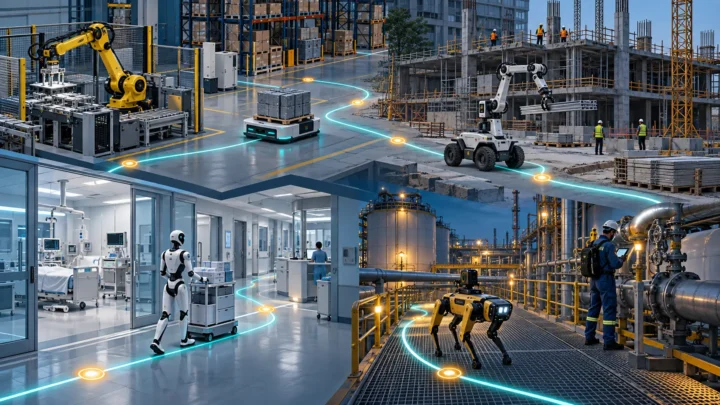
Where Physical AI Creates Value
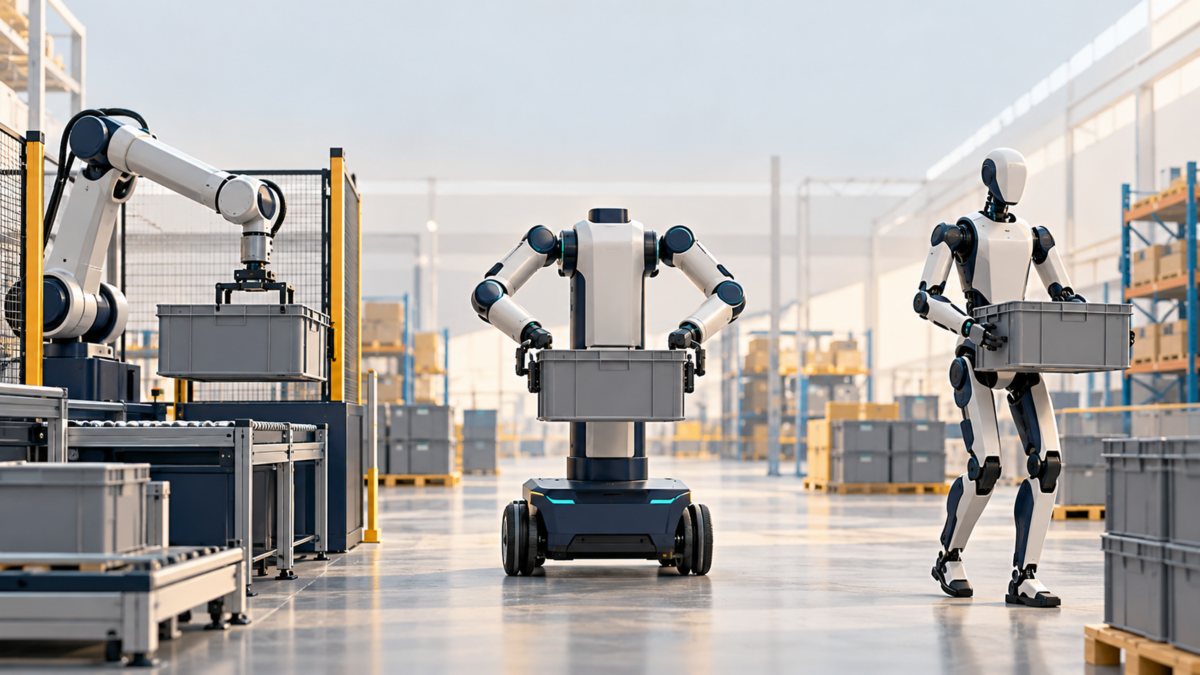
Physical AI creates durable value when a robot closes a complete operational loop under real constraints. This white paper compares major use-case domains, matches missions to fixed automation, AMRs, mobile manipulators, quadrupeds and humanoids, and provides a measurable framework for separating compelling demonstrations from investable operations.
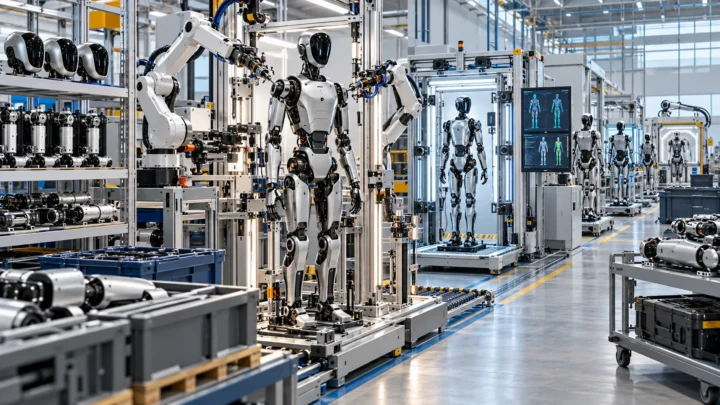
Building Robots at Scale
Robot industrialization is a lifecycle engineering problem. Scalable product families require controlled interfaces, qualified suppliers, traceable production, repeatable calibration, end-of-line evidence, software configuration integrity, repairable modules and disciplined circular flows. The decisive capability is preserving trustworthy configuration identity as robots are built, updated, serviced and remanufactured.
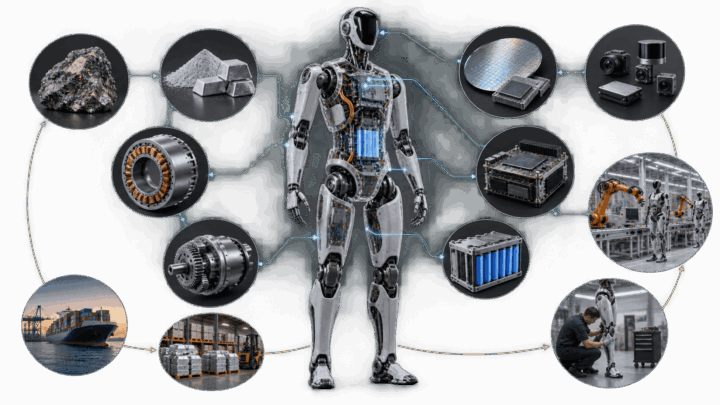
The Physical AI Supply Chain
Physical AI depends on a supply chain that extends from critical minerals to fleet services. This paper maps that chain, identifies the most consequential concentration and qualification risks, and proposes a resilience agenda for robot makers, component suppliers, integrators and industrial users preparing for scaled deployment.
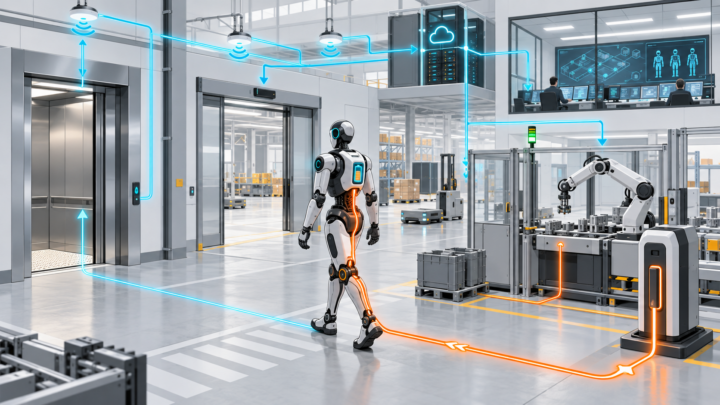
Autonomy Lives Outside the Robot
A robot carries intelligence, sensing and actuation, yet productive autonomy depends on the engineered world around it. Charging, connectivity, maps, fleet orchestration, building interfaces, maintenance and data governance form an external operating system. Designing this infrastructure for graceful degradation converts impressive machines into dependable operational capacity.
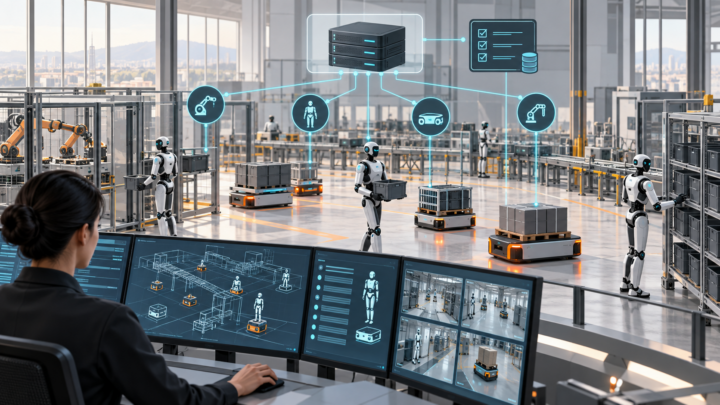
A Robot Fleet Is a Controlled Production System
Robot fleets become economically useful when every machine, software release, intervention and incident remains traceable. A disciplined operating model joins commissioning, configuration control, monitoring, maintenance, remote assistance and retirement into one evidence loop—protecting safety, availability and learning as fleet size, mission diversity and update cadence increase.
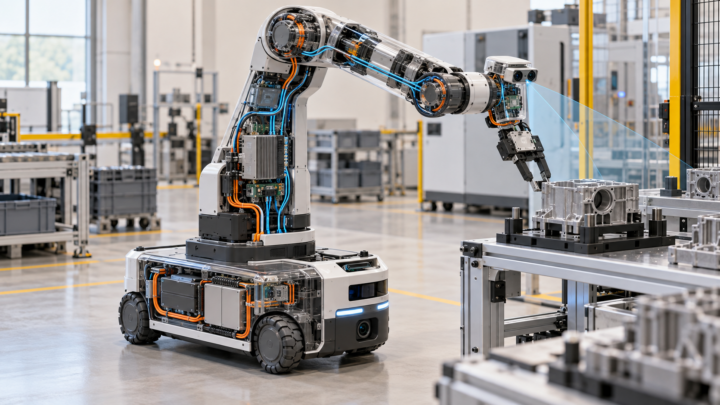
Physical AI: When Intelligence Gains a Body
Physical AI connects perception, world models, decisions and controlled action in a continuous physical loop. This engineering primer distinguishes it from automation, robotics and embodied AI, then explains how embodiment reshapes architecture, safety and value. A practical taxonomy and seven-question framework translate an emerging label into precise working language.
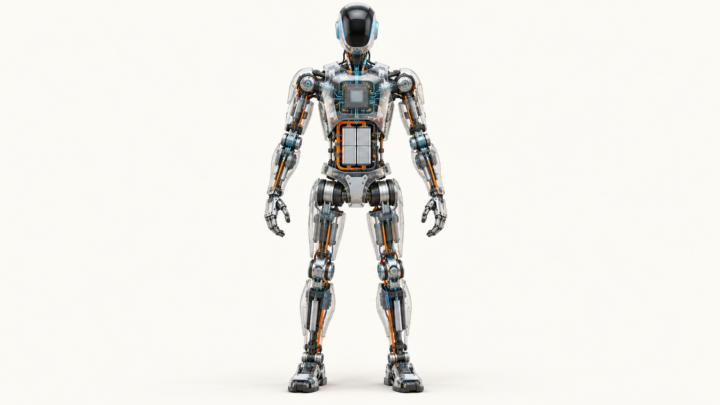
Where Humanoid Value Meets Scarcity
Humanoid robots are advancing quickly, yet their path to scale depends on a supply chain whose readiness varies sharply by subsystem. Actuation represents the largest hardware value pool, while precision motion, force sensing and system integration carry the highest bottleneck risk. The emerging opportunity is to industrialize complete, dependable functions